Refrigeration Rules: Proper Storage for Your GLP-1 Medication
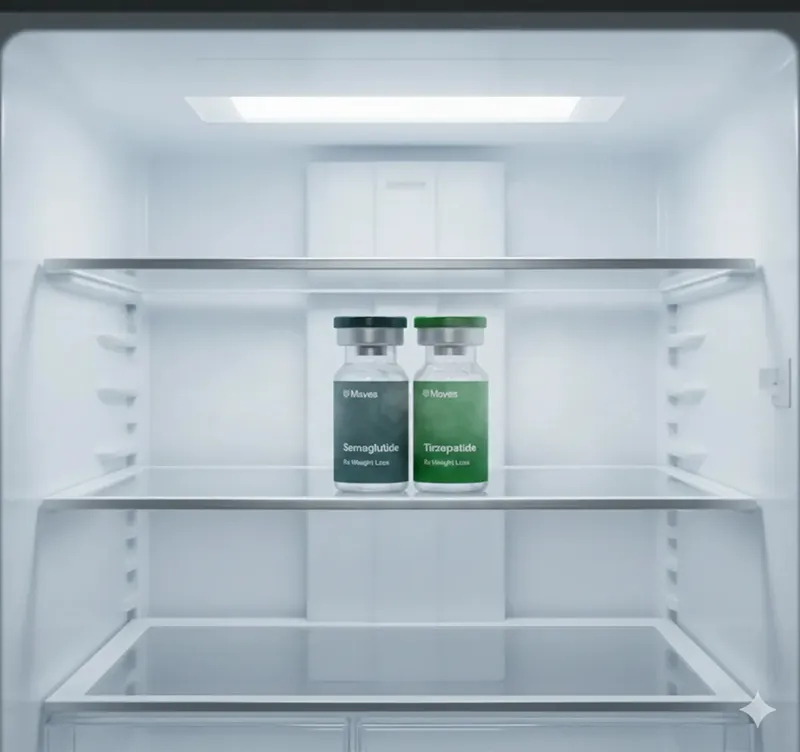
The efficacy of GLP-1s, such as semaglutide (Wegovy, Ozempic) and tirzepatide (Mounjaro, Zepbound), is entirely dependent on the structural integrity of their protein molecules. Unlike a standard pill, these medications are biological "peptides" which are short chains of amino acids that are highly sensitive to environmental conditions.
The direct answer is that improper storage can deactivate your medication.While most GLP-1s can survive for limited periods at room temperature, exposure to extreme heat or freezing temperatures will break the chemical bonds of the peptide, making the drug ineffective. This guide outlines the clinical storage requirements and the science of peptide stability.
The Science: Peptide Denaturation
GLP-1 medications are delicate biological structures. When these proteins are exposed to temperatures outside their specified range, they undergo a process called denaturation. In simple terms, the "shape" of the protein molecule begins to unfold or clump together.
Because these drugs work by fitting into specific GLP-1 receptors in your body like a key into a lock, a denatured protein no longer "fits." This doesn't necessarily make the medication toxic, but it does mean your body cannot use it to regulate insulin or suppress appetite. Furthermore, light exposure can trigger photo-oxidation, which further degrades the chemical sequence of the peptide.
Key Components: Temperature Thresholds
While you should always check the instructions that came with your specific brand, most GLP-1 pens follow a simple "Once it’s open" rule:
- The Fridge is for Spares: Keep your unopened boxes in the refrigerator. This keeps the medicine stable until you are ready to use it.
- The 30-Day Room Temp Rule: Once you start using a pen, you can typically leave it out of the fridge for about 30 days. Just make sure it stays in a cool, dark place (like a drawer) and doesn't exceed 86°F (30°C).
- The "Never" List: Never let your medicine freeze and never leave it in a hot car. If the liquid gets too cold or too hot, it "breaks" and won't work anymore.
Storage and Handling Foundations
Proper storage is about more than just the refrigerator; it involves protecting the medication from various environmental stressors.
- The "Center Shelf" Strategy: Avoid storing your medication in the refrigerator door, where temperature fluctuations are most frequent. Store it in the center of the fridge, away from the cooling element to prevent accidental freezing.
- Light Protection: Always keep your pens in their original packaging or a dark container. The opaque plastic of the pen provides some protection, but the original box is designed to shield the peptide from UV degradation.
- Travel Protocols: When traveling, use a dedicated medication cooling case. Do not place the medication directly against an ice pack, as this can freeze the liquid; use a case that provides a thermal buffer.
When to Intervene: Identifying Compromised Meds
You should inspect your medication before every injection. Medical intervention (in this case, replacing the pen) is necessary if you notice the following:
- Cloudiness or Particles: The liquid in your GLP-1 pen should be completely clear. If it appears "milky," cloudy, or has visible flakes, the proteins have likely clumped or denatured.
- Color Changes: Any yellowing or brownish tint is a sign of chemical degradation.
- The "Freeze" Test: If your medication has frozen—even if it has since thawed—do not use it. Freezing causes the peptide structure to shatter at a molecular level.
Red Flags
Contact your pharmacist or healthcare provider immediately if:
- You inadvertently injected frozen or overheated medication. While usually not an emergency, it may result in a "missed dose" effect where your blood sugar or appetite isn't controlled.
- The injection site shows unusual irritation. Degraded medication can occasionally cause localized skin reactions.
- The pen mechanism is jammed. This can happen if the medication has been exposed to heat, causing the internal components to expand.
FAQ Section
What happens if I leave my pen out overnight? If your house stayed below 30°C (86°F), the pen is likely fine. Most GLP-1s are stable at room temperature for several weeks once "in use." Simply put it back in the fridge or continue using it within the manufacturer's room-temperature window.
Can I keep my medication in the car? Never leave your medication in a car, even for a few minutes. Interiors can reach temperatures well over 40°C (100°F) very quickly, which will immediately denature the peptide.
Does the medication expire? Yes. There are two dates to watch: the expiration date printed on the box (for unopened, refrigerated pens) and the "use-by" date once the pen has reached room temperature. Always follow the shorter of the two.




Cut 15% of body weight - Lose the fat. Keep the muscle.